
The Treachery of Security Compliance
When the pursuit of certification overshadows the pursuit of security
I have long admired the work of René Magritte. In The Treachery of Images, painted in 1929, he gives us a pipe, plainly and faithfully rendered. Beneath it, in beautifully neat handwriting, are the words Ceci n’est pas une pipe: this is not a pipe.1 Magritte is quite right, of course. However convincing the picture, you can’t fill it with tobacco and smoke it.
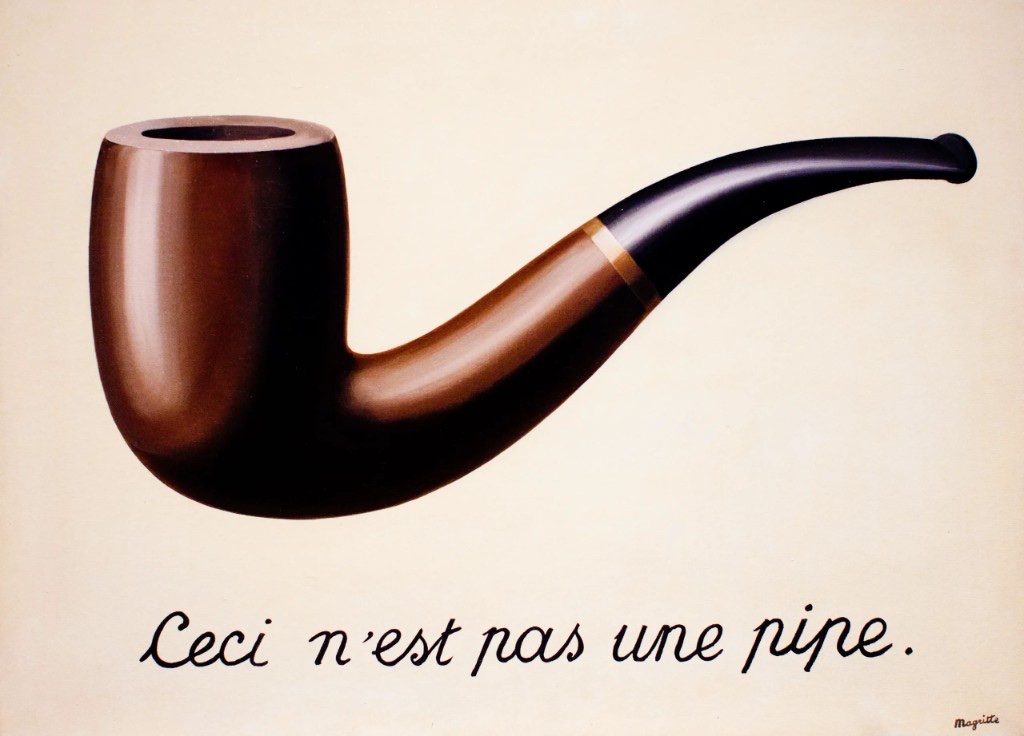
Now imagine replacing the pipe with an ISO/IEC 27001 certificate, framed and hanging in a company’s reception. What might Magritte have written underneath it? This is not cybersecurity.
I don’t mean that the certificate is false. It may have been honestly earned, through a competent assessment against a respected international standard. My concern is with what people take it to mean.
I have seen companies prepare for a Cyber Essentials Plus assessment, the UK’s government-backed test of basic cyber hygiene, by patching the devices selected for testing and leaving the rest of their estate exposed. I have seen the scope of assessments narrowed until the awkward parts fall outside it. The certificate that results looks just like one held by a company that fixed its weaknesses everywhere. Two identical certificates; two entirely different objectives. One company wanted to be secure. The other wanted to be certified.
My work as a Chief Information Security Officer gives me several vantage points on this. Companies bring me in because they need a CISO, and in some of them I hold executive responsibility for cybersecurity on a part-time basis. I also carry out internal audits and security assessments, and I undertake cyber due diligence for private equity investors considering the acquisition of a business. Compliance is part of what I look at in due diligence, but the investor’s questions go much further. What risk would we actually be inheriting? What will it cost to fix, how long will it take and what will that involve? Are the right people in the right roles, doing the right things? Is the work already under way on track or falling behind, and if it is behind, why, and what can be done about it? And what can we do right now to repair anything obvious, and to be ready if the worst happens, particularly around the time the deal is announced? Answering those questions means looking at everything from the direction of the company’s technology strategy to the security of its products and infrastructure.
Those questions are worth carrying through this essay, so let me borrow the investor’s chair. Imagine you are about to put a large sum of money into a software company. In the data room you find an ISO 27001 certificate,2 a clean report from its latest audit and perhaps a SOC 2 report as well. What should you reasonably conclude from them, and how far do they go towards answering the questions above? I’ll return to that as we go, and try to answer it at the end.
It matters to me because of what I have found. I have assessed businesses that had come through external audits without a single finding, only to discover serious weaknesses in their security. Across certified organisations in the UK, continental Europe, the United States and the Far East, I have found unpatched internet-facing systems; networks and applications exposed without appropriate firewall protection; no multi-factor authentication; excessive administrative privileges; weak passwords and poor password management; no security awareness training and no effective security monitoring; confidential documents left unsecured in offices; software development processes with no security checks to stop insecure code reaching production; and penetration test findings left unresolved.
These examples come from different organisations, but every one of them held ISO 27001 certification. None of the weaknesses is exotic. They are the fundamentals, and they are exactly what lets an attacker gain access to a system, move laterally through a network and operate undetected. Many of them take real investment and engineering effort to fix. I have also watched certified organisations struggle to manage cyber incidents because basic technical controls were missing and people did not know what to do.
Before going further, I want to be clear about three things, so that I don’t have to keep repeating them.
First, this is not an argument against ISO 27001, SOC 2 or Cyber Essentials. I believe in the value of all three.
Second, what follows is drawn from my own professional experience, not from a survey of the certification industry. The organisations I work with aren’t chosen because anyone suspected a problem: they need a CISO, or an investor wants to buy them. Even so, they are not a representative sample, and my experience can’t tell you how common these failures are.3 What it can show is that they happen, and how.
Third, my quarrel is with purpose and interpretation, not with the standards themselves. The trouble starts when certification becomes the goal, and when a certificate is allowed to stand for more than it says. I want organisations to stop working for compliance and start making compliance work for them.
What follows looks at how that inversion happens, why audits don’t always catch it, and what I would like to see change.
1
A pipe you can’t smoke
Assurance and security
Start with what the certificate actually says. ISO 27001 sets out requirements for an information security management system, or ISMS: the arrangements through which an organisation identifies, assesses and manages information security risk, and keeps improving how it does so. Certification is independent confirmation that the ISMS conforms to those requirements within a defined scope. It does not attest to the security of every application, server or network the company operates, and it was never designed to.4
The standard is risk-based, and I think that is one of its great strengths. Organisations face different threats, carry different obligations and work under different commercial constraints. A business may have compelling reasons to keep technology it would never choose if it were starting afresh. The standard accommodates that reality. It requires risks to be assessed, controls determined, treatment implemented and residual risks approved by the people who own them.
The difficulty lies in how that flexibility is used. Once a weakness has been written into the risk register, there is a temptation to treat it as dealt with. The entry is reviewed, the review is minuted, and the same risk reappears at the next audit, and the one after that. By then the register has stopped being a tool for reducing risk. It has become a carefully maintained record of why the organisation remains exposed.
Even when the decision to accept a risk is entirely reasonable, the exposure remains. Consider an old internet-facing FTP server that many customers still depend on, and that is subjected day and night to automated attempts to guess its passwords. The company may have legitimate commercial reasons for keeping it. It can document those reasons, assign an owner and approve a replacement plan. None of that makes the server any harder to break into.
An attacker trying to move laterally through a company’s network has no interest in its information security policy or the outcome of its last audit. What they meet are the real controls: how identities are protected, how the network is segmented, how endpoints are secured and whether anyone notices suspicious activity. Those controls either stop the attacker or they don’t.
I feel much the same way about incident response plans. Picture three o’clock in the morning, with ransomware spreading through the organisation. How useful is a carefully formatted plan that satisfied an auditor but has never been properly rehearsed? The people managing the incident need to know who is in charge, how to communicate if the corporate systems are down, who has the authority to isolate systems and how to get specialist help. They need a practical way of coordinating the response under immense pressure. I value incident response documentation and checklists precisely because, done well, they give people that. The ones that work were written for the person who will pick them up in an emergency, rather than the person who will inspect them in an audit.
So the first thing our investor should understand is that a certificate describes a management system. It may be an excellent one. It is still a description of how risk is managed, and the FTP server is still there.
2
Rituals of verification
The audit society and the rise of audit theatre
I have seen governance, risk and compliance teams carefully maintaining an ISMS while a fundamental technological transformation was under way elsewhere in the same business. Down the corridor, architects and engineers were changing the way the core product was designed and built. The people responsible for the ISMS had little understanding of what was happening and were absent from the conversations in which the security implications of those changes should have been weighed. They were busy preparing for the next audit. Meanwhile, decisions were being made that might determine the security of the product for years to come.
How does a capable, conscientious team end up there? The most convincing explanation I know comes from outside cybersecurity altogether. In 1997 the accounting scholar Michael Power published The Audit Society: Rituals of Verification, a study of the growth of auditing across public and private institutions and of what it does to the organisations being audited.5 In an earlier paper, Making Things Auditable, he showed how organisations reshape their activities so that they generate the kind of evidence an auditor can examine.6 Some of that is healthy: a business should be able to account for its decisions. The trouble begins when what can readily be audited starts to matter more than the work itself.
Power describes two ways this can go. The first is decoupling, in which the formal arrangements an organisation presents to the world drift away from what actually happens day to day.7 The second, more insidious, is colonisation, in which the demands of being audited begin to shape, and eventually dominate, the very activities they were meant to examine.8 An ISMS that runs alongside the business instead of through it has been decoupled. A security function whose year is organised around the audit calendar has been colonised. I recognise both in cybersecurity.
Economists will know the same dynamic as Goodhart’s Law. Writing about audit in British universities in the same year as Power, the anthropologist Marilyn Strathern put it in the form most people now quote:
“When a measure becomes a target, it ceases to be a good measure.”9
If the target is a certificate on the wall, the incentives follow. People learn what the auditor will ask for, develop ways of producing the evidence and become very good at preparing for the annual visit. In its most extreme form this is box ticking, and nobody stops to ask whether all that effort has made the business any more secure.
Bruce Schneier’s term security theatre describes measures that mainly provide a feeling of security.10 I think of audit theatre as its close relative: an organisation performs the rituals of assurance so convincingly that the people taking part lose sight of the security those rituals were meant to establish. Nobody in the theatre needs to be lying. They are simply absorbed in the performance.
3
Paper safety
Lessons from Nimrod and Challenger
On 2 September 2006, RAF Nimrod XV230 suffered a catastrophic mid-air fire over Afghanistan. All fourteen people on board were killed. The independent review that followed, led by Charles Haddon-Cave QC and published in 2009, has lessons that reach well beyond aviation.
The Nimrod fleet was the subject of a safety case: a structured argument, supported by evidence, that the aircraft could be operated safely. A safety case should identify hazards and show how the resulting risks are controlled. Haddon-Cave concluded that the work had failed to identify the critical fire hazard, and that had it been done properly, the loss of XV230 would have been avoided.11 The document existed. It had been produced and accepted. It missed the thing that mattered.
In his chapter on reforming the safety case regime, he wrote:
“The Safety Case regime has lost its way. It has led to a culture of ‘paper safety’ at the expense of real safety.”12
He did not propose abandoning safety cases. He wanted them to do their job again, with less bureaucracy, more attention to the risks themselves and greater involvement of the people who operate the aircraft. Hold on to that idea of operator involvement. I will come back to it, because I think it is exactly what many technology audits are missing.
Then, in a section of the review entitled Appearance and Reality, Magritte appears. Haddon-Cave cites the safety researchers Ibrahim Habli and Tim Kelly, who used The Treachery of Images to illustrate the difference between a safety case and its depiction: the more persuasive the depiction, the easier it is to overlook deficiencies in the argument and evidence beneath it.13 Of all the places to meet Magritte’s pipe again, an independent review into a military air disaster must be among the least expected. The point is the same one. A convincing representation can create confidence that the evidence does not justify.
Richard Feynman met another form of the problem in the investigation of the 1986 Challenger disaster. In his personal appendix to the presidential commission’s report, he described the gulf between estimates of the probability of losing a shuttle: around one in a hundred among working engineers, against figures as low as one in a hundred thousand from management.14 He also described how flight readiness criteria were gradually relaxed, so that a risk once tolerated could come to be regarded as acceptable simply because the last flight had not ended in disaster.
I draw these parallels to illuminate a failure mode, not to compare a weak audit with the loss of human life. What they share is the way a discipline meant to establish justified confidence in the management of risk can become a source of unjustified confidence instead. A clean audit, like a history without a known breach, should never stop anyone asking whether a weakness is there anyway. And independent scrutiny should do what Feynman did: bring the engineers’ understanding of risk to the people making decisions about it.
4
A good grilling
What has happened to independent scrutiny?
About ten years ago, I would go into an ISO 27001 audit expecting a good grilling. I expected the auditor to go looking for weaknesses and to question me about anything they found that I hadn’t already recognised as a risk. If I had recognised it, I expected to be challenged on what was being done about it, who owned the action and when it would be completed. It wasn’t always comfortable, but an uncomfortable audit can be an extremely useful one.
My experience in recent years has often been quite different. I have taken part in audits in which hours went by without my speaking to the auditor at all: a half-hour call here, another there, and long stretches in between in which the auditor appeared to be reading documents and writing the report. I have seen auditors move straight from one engagement to the next. I was used to seeing time set aside after an audit for report writing and follow-up. I see much less of that now.
Written evidence and a good report matter; a certification decision has to be defensible. My concern is that preparing the report is consuming time that should be spent on the investigation. How well can an auditor understand a complex technology business if they spend so little time with the people who build and run its systems?
I suspect commercial scheduling pressures play a part, and perhaps the demands of internal report review. In the UK, the United Kingdom Accreditation Service (UKAS) assesses the competence and impartiality of certification bodies, and reliable audit records rightly matter to accreditation.15 I cannot attribute what I have observed to UKAS requirements or to the profit motive. I do question whether enough time is being protected for investigation and follow-up.
Competence matters as much as time. In March 2024, UKAS announced its transition arrangements for ISO/IEC 27006-1:2024, the standard governing the bodies that audit and certify information security management systems. Among the changes was the removal of prescribed quantitative requirements for ISMS auditors’ practical work and training experience, including a previous requirement for four years’ full-time practical workplace experience.16 Certification bodies remain subject to requirements for competence and impartiality, and in fairness, the number of years someone has spent auditing tells me little about whether they understand modern software engineering. What I want to know is how a certification body establishes that the people it sends have the technical competence to scrutinise the business in front of them, and how that competence is kept up to date as technology changes.
There is an irony here that takes us back to Power. If the auditee is shaped by the need to present an auditable management system, the auditor may be shaped by the need to present an auditable audit. When audit quality is judged mainly through the report, the auditor has every incentive to produce an impeccable document, and a technically weak audit can still leave an excellent record of the process that was followed.
A fair challenge to all of this is that I’m a security specialist, so of course I find problems. I accept that. But it raises an awkward question: what is an independent auditor for, if not to look closely enough to find them? The weaknesses I described at the start aren’t obscure. Unpatched internet-facing systems, missing multi-factor authentication, excessive privileges and unresolved penetration test findings sit squarely within controls the standard itself expects organisations to address, from managing technical vulnerabilities to authentication and privileged access. No auditor will find everything, and a sampled audit isn’t a technical assessment. But when a company has recently come through an external audit without a single finding, and weaknesses like these are found soon afterwards, the difference usually isn’t expertise alone. It’s where each of us looked, how long we spent looking and who we spoke to.
A second objection is that auditors can’t be expected to be engineers, and that a more technical audit would take more days, which somebody has to pay for. Both points deserve an answer. I don’t expect an ISMS auditor to be a penetration tester or an expert in every technical discipline. I do expect the audit team, between them, to understand the business and its technology well enough to ask the right questions and judge the answers. In recent years, I have felt that auditors interviewing software engineers lacked the technical knowledge even to know which security questions to ask. As for cost, the audits I have described did not lack allocated days. What they lacked was time with the people who could answer the questions, and the knowledge to ask the right ones. Certification audits are necessarily based on samples, and nobody could examine every control across an enterprise in the time available. That is exactly why the sample needs to be chosen with the business’s real risks in mind, by people who know what they are looking at.
In fairness to auditors, their job is to assess the management system: whether it conforms to the standard and whether it is effective. They are not commissioned to assess the effectiveness of cybersecurity across the business. Perhaps that is the heart of the problem with the way ISO 27001 is audited today. In my experience, the auditor too often arrives with a list of requirements and works through it box by box, and if every box can be ticked, the management system is judged to be working. Yet a good, effective management system would be doing exactly what that kind of audit doesn’t: asking whether the organisation’s security actually works. The standard itself expects organisations to evaluate their information security performance, as well as the effectiveness of the ISMS.17 An auditor judging whether the management system is effective should therefore be asking whether it knows how secure the business really is. The risk can be recorded, the owner named and the replacement plan approved. Every box ticked. But we still have that old FTP server, don’t we?
5
An audit of the past
Scrutinising a business that is building the future
Much of my work is with technology businesses that develop and operate software-as-a-service products. Their engineers write code, design and build cloud infrastructure, run networks in cloud environments and data centres, and maintain the systems on which the business depends. Increasingly, they are using AI to change how they work.
I have spent months working with engineering teams to improve the security of their products and development practices. That has involved introducing tools such as Aikido for application security, and using Claude Code and Cursor cloud agents to examine source code and Terraform infrastructure configurations for security weaknesses. We have reflected those changes in the ISMS policies. I want an independent auditor to scrutinise that work and tell us where our approach falls short.
In practice, I have sat in audit interviews where the examination of software development amounted largely to a demonstration of Jira tickets, with ticket references noted down for the audit report. I have seen auditors appear uncomfortable when the discussion turned to the technical aspects of software engineering. Meanwhile, the engineers who had spent months on the security work were sitting there, available to answer questions about what they had built. Some visibly lost interest as the discussion returned to ticket numbers. Remember Haddon-Cave’s call for operator involvement: these engineers are the operators. Leaving them unquestioned in the room is a wasted opportunity, for the auditor as much as anyone.
A Jira ticket can show that a change was approved. Can it show that an insecure change would have been stopped before it reached production? It can’t. To find that out, an auditor needs to spend time with the engineers and architects. How do they assess the security risks of a new design? What checks are performed before software reaches production? Are those checks mandatory, and who has the ability to override them? Show me the actual controls in the build and deployment pipeline.
AI-assisted software development is transforming those practices. Tools such as Claude Code, Cursor and GitHub Copilot can do far more than suggest the next line of code. Depending on their configuration, coding agents can make changes to repositories, run commands, use external tools and interact with other systems. The Model Context Protocol (MCP), for example, is a standard way for AI applications to connect to data sources and tools. The identities, permissions, data flows and trust relationships involved in producing software are all changing.
Yet in the external audits I have experienced, I have not been asked how the identities and permissions of coding agents are managed, which systems they can connect to or how their MCP connections are controlled. Nor have I been asked to show the instructions given to those agents to help them produce secure code, in the way an auditor might ask for the secure development policy followed by a human engineer. An informed auditor should examine both the instructions and the technical enforcement, independent review and testing that sit behind them, because written instructions alone are not enough to control an autonomous agent. Can an agent change the code and also the security checks meant to govern that code? Does it have access to sensitive repositories or credentials? Has the organisation understood the risks of its new way of working?
These are not speculative concerns. The US National Institute of Standards and Technology identifies insecure AI-generated code, unauthorised actions, excessive permissions and manipulation of the context supplied to agents as risks in the software development lifecycle.18
Michael Power has recently warned of a related danger for auditing itself. As businesses run more of their operations through software and algorithms, audits increasingly rely on software too, plugged into the very systems being examined. The evidence then comes from the systems under audit, and at the extreme the auditor is reduced to checking what the tools report, de-skilled rather than expert. His answer is that auditing must remain a human conversation.19 I agree: the most valuable evidence in a technology audit is still what you learn by asking engineers good questions.
It would be easy to say that all of this is too new to expect auditors to examine. But ISO 27001 is deliberately technology-neutral. It already requires organisations to manage the risks arising from change, and it doesn’t need to name a coding agent to apply to one. Nor are the questions exotic. Identity, permissions, change control and segregation of duties are things auditors have long examined for human engineers. What matters is whether the ISMS, and the people auditing it, keep pace. If a business has fundamentally altered the way it develops software, last year’s evidence may say very little about the risks it faces today.
For our investor, this is where a certificate can mislead most quietly. A company can demonstrate conformity with a description of the way it used to build software while the way it actually builds software has changed completely.
6
The same evidence, again
More audits, but more assurance?
One of the frustrations of running cybersecurity in a technology business is the sheer amount of time consumed by repeated assurance exercises. An ISO 27001 audit may be followed by a SOC 2 engagement, a series of customer security assessments and a succession of questionnaires asking for much the same evidence in slightly different formats. The result is audit fatigue, and its cost is real. Time that could be spent improving controls, paying down technical debt or rehearsing incident response goes instead on demonstrating that processes exist.
SOC 2 is often described as a certification, but it is an independent attestation engagement against the Trust Services Criteria established by the American Institute of Certified Public Accountants. A Type 2 report examines the design and operation of controls over a specified period, and provides valuable assurance within the system and scope it covers.20 A report showing that controls have operated as described does not, however, answer every question a company should be asking about whether those controls are adequate. The commercial imperative to obtain the report can encourage a company to keep demonstrating that its existing controls work, even as the threats they were designed to address are changing.
I once read a SOC 2 Type 2 report for a business that recorded an exception for a weak password. Good, you might think. The auditor had found a six-character password in use, and the company’s policy required a minimum of eight. The exception was that the password didn’t meet the policy. Nowhere did the report question the policy itself, even though an eight-character minimum belongs to the 1990s. Current NIST guidance requires at least 15 characters for a password used on its own, and allows eight only when the password is one part of multi-factor authentication.21 My own passwords run to 64 characters and more, protected by app-based multi-factor authentication, and I prefer passkeys wherever they’re supported. In fairness, the examination tested whether the control operated as the company described it, and on that measure the exception was correct. But a report can faithfully record that a company failed to follow a weak policy without ever saying that the policy is weak. That is audit theatre.
None of this makes more assurance intrinsically wasteful. An independent report that many customers can reuse should reduce duplication, and an examination over a period can detect inconsistencies that a point-in-time assessment would miss. The test I would apply to each new exercise is simple: what will it tell us, or our customers, that we don’t already know? If the honest answer is very little, the effort would be better spent on security itself.
For the investor, a thick stack of assurance reports can look like depth. Often it is the same evidence photographed from different angles.
7
A floor, not a ladder
Cyber Essentials Plus and the value of a technical baseline
In my opinion, one of the most underrated schemes in the UK is Cyber Essentials Plus. Cyber Essentials is sometimes regarded as a stepping stone to ISO 27001, as though the latter were a superior version of the same thing. I think this overlooks one of its great strengths: its prescriptive technical requirements.
The scheme covers five areas of basic cyber hygiene: firewalls, secure configuration, security updates, user access control and malware protection. Cyber Essentials Plus adds independent technical testing. Under the requirements introduced in April 2026, failing to enable multi-factor authentication for cloud services where it is available, or failing to apply high-risk and critical updates within 14 days of release, results in automatic failure.22 The requirement is clear, and an entry in a risk register will not change the outcome of the test.
ISO 27001, by contrast, provides a framework for managing risk. A company can legitimately retain a risk following appropriate assessment, treatment and approval, so an ISO 27001 certificate does not establish that the company meets every Cyber Essentials requirement. A UK Government evaluation published in 2024 illustrates the gap: of 53 surveyed organisations that held ISO 27001 certification but had never obtained Cyber Essentials, 42 per cent reported meeting only some of its technical controls.23 The sample is small and the answers self-reported, but it shows why independent assurance of basic technical hygiene is worth having.
I described at the start the companies that patch only the devices selected for testing. I am not the only one to have seen it. IASME, the scheme’s delivery partner, reported in February 2026 that a small number of organisations had passed Cyber Essentials Plus after applying updates to the sampled devices without addressing vulnerabilities across the rest of the in-scope estate. It announced that, following a failed update management test, reassessment would include an additional random sample as well as the original devices, and that a second failure would lead to revocation of the underlying Cyber Essentials certificate.24
This is Goodhart’s Law in practice. To its credit, the scheme changed how it measures, so that the measure is harder to game.
Some will object that prescriptive rules can’t keep pace with technology, which is precisely why ISO 27001 is risk-based. Up to a point, they are right. Cyber Essentials Plus tells us relatively little about how an organisation governs the security of its products, or how well it could recover from a major cyber incident. I would not replace ISO 27001 with it. But it answers a question that ISO 27001 does not ask directly: are the basics actually in place? I want a business to have both a sound technical floor and, above it, a management system capable of identifying and addressing the risks specific to that business. The two schemes are not rungs on a ladder of prestige. They answer different questions, and an investor should want both answers.
8
Making compliance work
Three changes I would like to see
The first change is a closer relationship between security governance and business strategy. An ISMS should be in lockstep with the direction in which the business and its technology are moving. If a company is going through a radical transformation in how it develops its products, the people responsible for information security should be in those discussions with the CTO and the engineering teams, helping to shape decisions about technology, architecture and investment. They should not be discovering those decisions months later while gathering evidence for an audit.
This is entirely in keeping with the spirit and requirements of ISO 27001, which places responsibility on top management for aligning information security with strategic direction and integrating the ISMS into the organisation’s processes.25 Running security governance as a separate administrative activity is an organisational choice; the standard doesn’t require it. A risk register should help determine what work gets done and how money is spent. Policies should establish behaviours that are reflected in the systems people actually use. Management reviews should establish whether all of this is working and where it needs to improve. If the ISMS is doing that job, the evidence needed for certification will largely be a by-product of how the business already operates. Compliance should emerge from running security well, rather than being the reason for running it.
The second change concerns the choice of auditor. I believe companies should actively seek certification bodies that will assign people with the technical expertise to understand and challenge their business. They should give those auditors access to the people who understand the systems, and enough time to examine the evidence. If an auditor identifies an important weakness I was unaware of, I want to know about it. I would far rather discover it through an audit than through a cyber incident. The point of inviting independent scrutiny is to make sure you are not marking your own homework.
That doesn’t mean auditors should be judged by the number of findings they raise, or that they should manufacture nonconformities where none exist. An excellent auditor may find none. I judge the value of an audit by the quality of the scrutiny behind its conclusions, rather than by how many findings appear in the report. It is for the organisation to decide how to address any weaknesses; the auditor must retain the independence to challenge those decisions. I want robust scrutiny, not an adversarial relationship for its own sake.
The third change is about honesty. I have seen executives press to achieve certification quickly for commercial reasons, and I understand the pressure: a certificate can help win business. Research by Mirtsch, Pohlisch and Blind suggests that ISO 27001 certification can act as a signal to the market, especially where regulation is weaker.26 The commercial value of that signal is legitimate. What troubles me is when the desire to acquire the signal greatly outweighs the desire to improve the security it is taken to represent.
Some customers and executives misunderstand what certification establishes. Some organisations, in my experience, are quite content for people to believe that it means more than it does. Take a business that knows its technical controls are deficient but uses its certificate to reassure customers that it is secure. Those customers may be deciding whether to entrust it with their data or to rely on it for critical services. Does that business have a responsibility to explain what the certificate covers, and where its assurance stops? I think it does.
Some will argue that the certificate already makes this clear. Every ISO 27001 certificate states its scope: which parts of the business were assessed. It might cover one product, one service or one office rather than the whole company. If a customer assumes it covers more, the argument goes, that’s the customer’s mistake, not the company’s. Technically, that’s true. But an organisation that knows its customers are drawing the wrong conclusion, and lets them, is relying on that misunderstanding. At that point the certificate is being asked to do a job it was never designed to do, and the organisation knows it.
For me, this is a question of ethics as much as assurance. I have set out my own professional commitments at length in a public ethical declaration.27 One of them is actions over theatre: the purpose of any assessment is better decisions and real improvement, not impressive-looking reports. Above all, I stand behind honesty and transparency, whether that means communicating risk to a board or keeping stakeholders informed during and after an incident. As long as confidentiality is protected, transparency is king. There is no pride to be gained in concealing the truth, and using a certificate to offer reassurance the evidence can’t support is a quiet way of concealing it. An audit is a moment when somebody is checking. Trust depends on how you behave when nobody is checking.
Conclusion
Reading the caption
So what should our investor conclude from the certificate in the data room?
That the company has an information security management system which an independent auditor found to conform to an international standard, within a stated scope, on the evidence sampled at the time. That is worth knowing, and it may describe a very good management system. What it does not tell the investor is how well the company’s security actually works. No single measure could tell them that, yet a certificate is too often treated as if it were one. Nor does the certificate tell them what it would cost to put things right, how long that would take, or whether the right people are in place to do it. How much weight the certificate can bear depends on questions it cannot answer on its own: what was in scope and what was left out, which risks were accepted and why, how deeply the auditor examined the technology, and how much the business has changed since. Those questions have to be asked directly.
I remain a supporter of security compliance and independent assurance. I want an ISMS that directs the business towards better security, and auditors with the expertise and the time to challenge our understanding of risk. I want organisations to treat an audit finding as an opportunity to improve, and to welcome scrutiny even when it is uncomfortable.
If you lead security, put your ISMS in the room where engineering decisions are made, and put your engineers in front of your auditor. If you are an executive, don’t let the deadline for a certificate decide its scope, and be candid with customers about what it covers. If you audit, spend your time with the people who build the systems, ask about the agents as well as the tickets, and let your records show how deep the work went. And if you rely on someone else’s certificate, as a customer or as an investor, ask what lies outside it.
Think again of the pipe in Magritte’s painting. The work makes no attempt to deceive; Magritte even wrote the explanation underneath it. A customer looking at a security certificate deserves the same clarity: what was assessed, what kind of assurance it provides and what remains outside it.
The treachery is not in the certificate itself, but in what the organisation allows others to believe it represents.
Notes
- René Magritte, The Treachery of Images (This Is Not a Pipe), 1929, oil on canvas. Los Angeles County Museum of Art. ↩
- Formally ISO/IEC 27001:2022. From here on I use the shorthand most practitioners use: ISO 27001. ↩
- Michael Power, reflecting on The Audit Society twenty-five years after its publication, acknowledged the criticism that it tended to draw on examples in which the problems already existed (Power, 2024). The organisations described here weren’t selected that way, but the broader caution still applies. Research linking certification, audit quality and real security outcomes would be valuable; Culot et al. (2021) set out a research agenda for the standard. ↩
- ISO and IEC (2022). ↩
- Power (1997). ↩
- Power (1996). ↩
- The idea of decoupling owes much to the sociologists John Meyer and Brian Rowan, who described how organisations adopt formal structures that confer legitimacy while their everyday activity carries on separately (Meyer and Rowan, 1977). ↩
- Power (1997), chapter 5. ↩
- Strathern (1997), p. 308. The principle is named after the economist Charles Goodhart; Strathern’s phrasing is the one most often quoted. ↩
- Schneier (2007). Schneier also argues that reassurance has a legitimate place when it brings people’s feeling of security closer to the reality. Audit theatre does the reverse: it lets the feeling drift away from the reality. ↩
- Haddon-Cave (2009), p. 259. ↩
- Haddon-Cave (2009), p. 533. ↩
- Haddon-Cave (2009), p. 539, discussing Habli and Kelly (2007). ↩
- Feynman (1986). ↩
- UKAS (n.d.). ↩
- UKAS (2024); ISO and IEC (2024). ↩
- ISO and IEC (2022), clause 9.1. ↩
- NIST (n.d.), section 2.7. ↩
- Power (2026). ↩
- AICPA (2022a; 2022b). A Type 1 report addresses the design of controls at a point in time; a Type 2 report also covers their operating effectiveness over a period. ↩
- NIST (2025), SP 800-63B-4. ↩
- IASME (2026); NCSC (2026). The updated requirements apply to assessment accounts created from 27 April 2026. ↩
- DSIT (2024). ↩
- IASME (2026). ↩
- ISO and IEC (2022), clause 5.1. ↩
- Mirtsch, Pohlisch and Blind (2026). ↩
- JandaSec, Ethical Declaration, jandasec.com/ethical-declaration. ↩
Sources
Online sources accessed November 2026.
- AICPA (2022a). 2017 Trust Services Criteria for Security, Availability, Processing Integrity, Confidentiality, and Privacy (with revised points of focus, 2022). American Institute of Certified Public Accountants.
- AICPA (2022b). SOC 2: Reporting on an Examination of Controls at a Service Organization Relevant to Security, Availability, Processing Integrity, Confidentiality, or Privacy. October 2022 edition. American Institute of Certified Public Accountants.
- Culot, G., Nassimbeni, G., Podrecca, M. and Sartor, M. (2021). ‘The ISO/IEC 27001 information security management standard: literature review and theory-based research agenda’. The TQM Journal, 33(7), pp. 76–105. doi.org/10.1108/TQM-09-2020-0202
- DSIT (2024). Cyber Essentials impact evaluation. Department for Science, Innovation and Technology, 23 October.
- Feynman, R.P. (1986). ‘Personal observations on reliability of shuttle’. In Report of the Presidential Commission on the Space Shuttle Challenger Accident, vol. 2, Appendix F.
- Habli, I. and Kelly, T. (2007). ‘Safety case depictions vs. safety cases – would the real safety case please stand up?’ 2nd IET International Conference on System Safety. doi.org/10.1049/cp:20070472
- Haddon-Cave, C. (2009). The Nimrod Review: An independent review into the broader issues surrounding the loss of the RAF Nimrod MR2 Aircraft XV230 in Afghanistan in 2006. HC 1025. London: The Stationery Office.
- IASME (2026). ‘Important update: Changes to Cyber Essentials for April 2026’. 12 February.
- ISO and IEC (2022). ISO/IEC 27001:2022 Information security, cybersecurity and privacy protection — Information security management systems — Requirements. Geneva: International Organization for Standardization.
- ISO and IEC (2024). ISO/IEC 27006-1:2024 Information security, cybersecurity and privacy protection — Requirements for bodies providing audit and certification of information security management systems — Part 1: General. Geneva: International Organization for Standardization.
- JandaSec (2026). Ethical Declaration. Last reviewed 13 October 2026. jandasec.com/ethical-declaration
- Magritte, R. (1929). The Treachery of Images (This Is Not a Pipe). Oil on canvas. Los Angeles County Museum of Art.
- Meyer, J.W. and Rowan, B. (1977). ‘Institutionalized organizations: Formal structure as myth and ceremony’. American Journal of Sociology, 83(2), pp. 340–363. doi.org/10.1086/226550
- Mirtsch, M., Pohlisch, J. and Blind, K. (2026). ‘Certification as a compensation mechanism for weak regulation? Exploring the diffusion of the international standard ISO/IEC 27001 for information security management’. Computers & Security, 162, 104774. doi.org/10.1016/j.cose.2025.104774
- NCSC (2026). Cyber Essentials: Requirements for IT Infrastructure, version 3.3. National Cyber Security Centre.
- NIST (2025). SP 800-63B-4: Digital Identity Guidelines — Authentication and Authenticator Management. National Institute of Standards and Technology, August 2025.
- NIST (n.d.). ‘Notional Reference Model for DevSecOps for Demonstration of NIST SSDF’, section 2.7, Artificial Intelligence. National Cybersecurity Center of Excellence.
- Power, M. (1996). ‘Making things auditable’. Accounting, Organizations and Society, 21(2–3), pp. 289–315. doi.org/10.1016/0361-3682(95)00004-6
- Power, M. (1997). The Audit Society: Rituals of Verification. Oxford: Oxford University Press. doi.org/10.1093/acprof:oso/9780198296034.001.0001
- Power, M. (2024). ‘Twenty-five years of the audit society: A personal reflection’. In Lapsley, I. and Miller, P. (eds.), The Resilience of New Public Management. Oxford: Oxford University Press, pp. 70–92. doi.org/10.1093/oso/9780198883814.003.0003
- Power, M. (2026). ‘Auditability in the digital age’. International Journal of Auditing, 30(4), pp. 597–603. doi.org/10.1111/ijau.70038
- Schneier, B. (2007). ‘In praise of security theater’. Schneier on Security, January.
- Strathern, M. (1997). ‘“Improving ratings”: Audit in the British University system’. European Review, 5(3), pp. 305–321. doi.org/10.1017/S1062798700002660
- UKAS (2024). ‘Transition arrangements for ISO/IEC 27006-1:2024’. Technical bulletin, 7 March. United Kingdom Accreditation Service.
- UKAS (n.d.). ‘Accreditation vs certification: What’s the difference?’ United Kingdom Accreditation Service.